Tuesday, 25 November 2014

Winter Braid Design for Yarn Stories

The lovely new yarn company, Yarn Stories, introduced themselves to knitters a few weeks ago at the Knitting & Stitching Show at Alexandra Palace. When I visited the Show, I was delighted to see a huge photo of my hand warmers design on the stand! The pattern and yarn for Winter Braid are now available through the Yarn Stories website.

Winter Braid Handwarmers by Emma Vining for Yarn Stories
My Winter Braid hand warmers and hat are knitted in Yarn Stories Merino and Alpaca Aran. This gorgeous yarn feels great to knit with and there is a lovely range of colours to choose from. You can read all about the background of the yarn and the company here and more about me and my design inspirations on the Yarn Stories Designer Profile Page.


Monday, 24 November 2014

Fashion in Motion: SIBLING

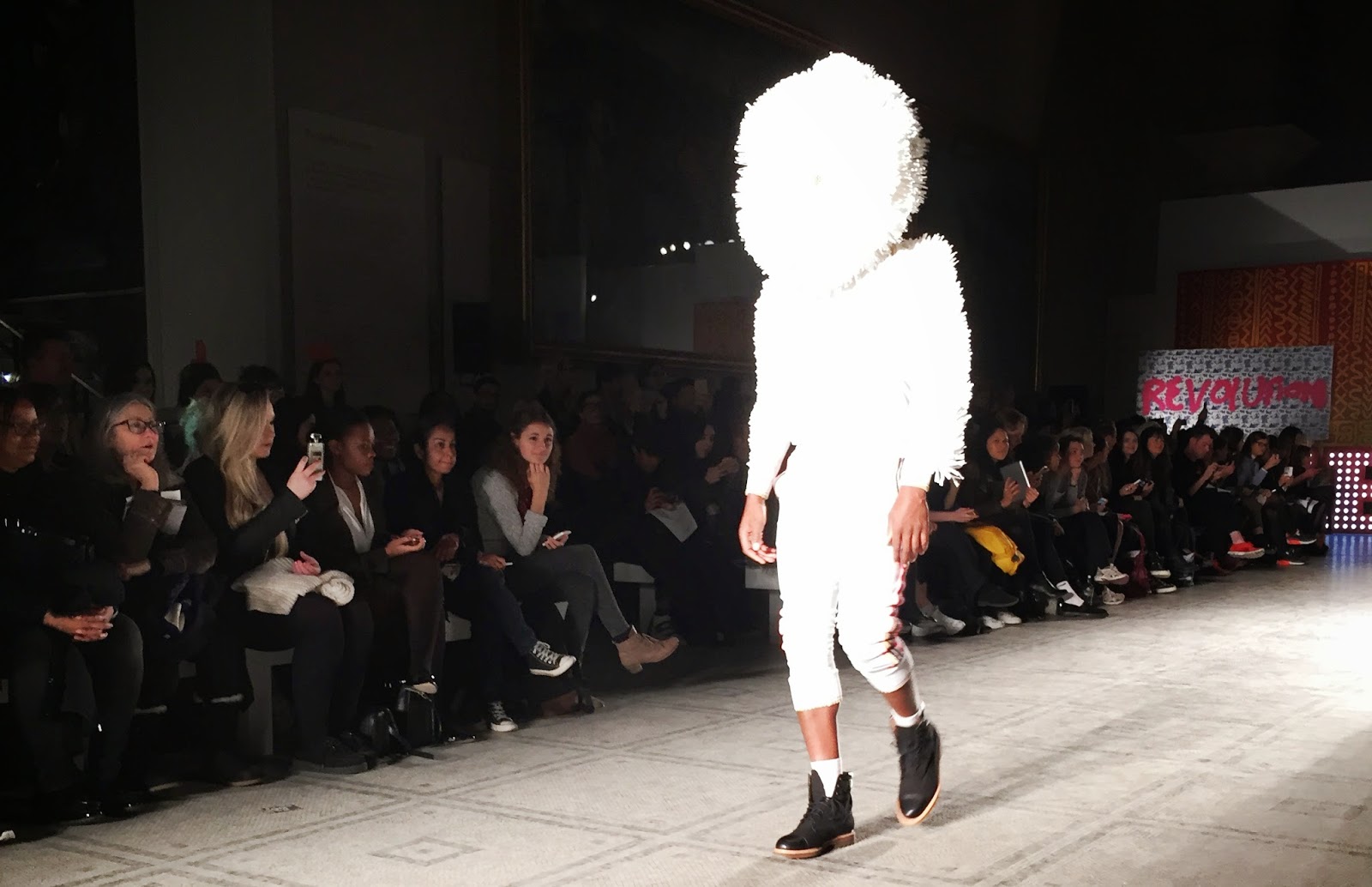
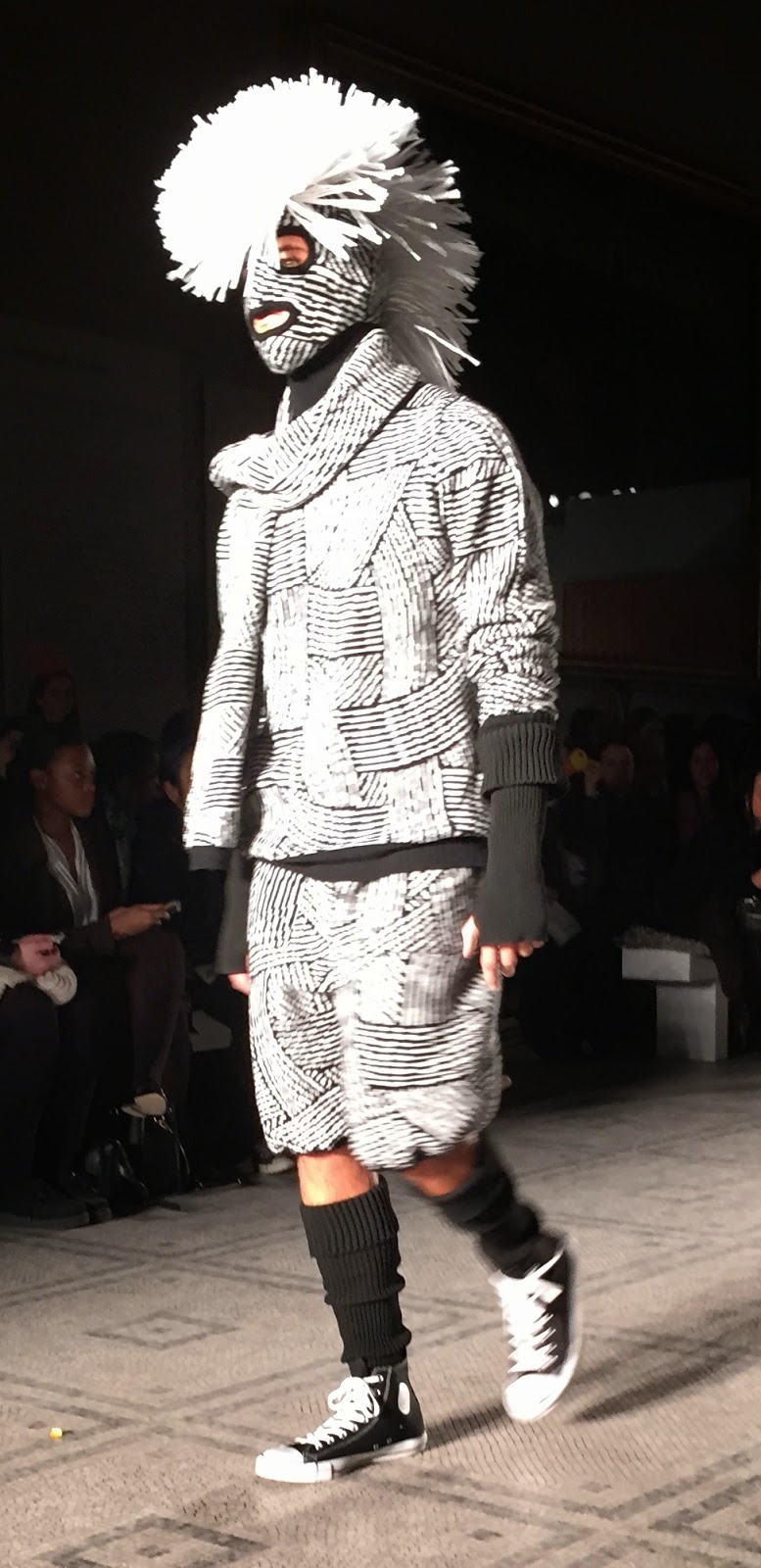
The Knitwear Collective, SIBLING, took part in the V&A's Fashion in Motion on Friday 21st November 2014. I love the outrageous, colourful and daring knit and crochet creations by these extremely imaginative designers, so I was delighted to have a ticket for one of the sold out shows. Seeing the garments in motion under the catwalk lights was fantastic!

Fashion in Motion: Sibling
Photo by Emma Vining
SIBLING was formed in 2008 by Joe Bates, Sidney Bryan and Cozette McCreery. You can see more of their amazing collections on the London Fashion Week Website.

The following photos show some of the exciting menswear garments that 'wowed' the crowd at Fashion in Motion.

Fashion in Motion: SIBLING
Photo by Emma Vining
Fashion in Motion: SIBLING
Photo by Emma Vining
Fashion in Motion: SIBLING
Photo by Emma Vining
Fashion in Motion: SIBLING
Photo by Emma Vining
Fashion in Motion: SIBLING
Photo by Emma Vining
Fashion in Motion: SIBLING
Photo by Emma Vining 
Fashion in Motion: SIBLING
Photo by Emma Vining
Fashion in Motion: SIBLING
Photo by Emma Vining
Fashion in Motion: SIBLING
Photo by Emma Vining
Fashion in Motion: SIBLING
Photo by Emma Vining
Fashion in Motion: SIBLING
Photo by Emma Vining
Fashion in Motion: SIBLING
Photo by Emma Vining
Fashion in Motion: SIBLING
Photo by Emma Vining
Fashion in Motion: SIBLING
Photo by Emma Vining

Thursday, 20 November 2014

Blue Wrap in Knit Today, Issue 106

My Blue Wrap Design is in Knit Today Magazine Issue 106! This softly textured wrap is great for layering and is very versatile. Inspired by rows of lanterns hung up to light up the night, this stylish wrap uses eyelets to increase and decrease, creating the little lantern shapes. The pattern shapes also form the edges of the wrap.

Image from Knit Today

Image from Knit Today
You need 3 x 100g balls of Sirdar Wool Rich Aran in Powder Blue, Shade 313 to make this wrap. The finished wrap measures 30cm x 160cm.

Image from Knit Today
Pattern detail copyright Emma Vining
There are lots of great patterns in this Issue and you can have a peak inside on the Knit Today Website. Designers featured include Sarah Hatton, Debbie Bliss and Helen Ardley. There is also a great 'Knitty' Christmas gift guide and the article by Rhian Drinkwater on Yarn Swaps Made Simple explains how to choose alternative yarns for your favourite patterns.

The ad for next month's Knit Today, Issue 107 is at the back of Issue 106 and I am so excited to see my sweater design featured! My double moss stitch and cable pattern sweater looks great in the sparkly pink Bergere de France yarn. Issue 107 is on sale from Monday 15th December.


Blue Wrap Pattern Correction Update:
Whoops! There is a missing 'P1' in the Main Pattern instructions for the Blue Wrap. The corrected instructions are on the Knit Today Website. Sorry for any inconvenience this may have caused.

Saturday, 15 November 2014

The Knitting History Forum Conference 2014

The Knitting History Forum is an international society originally founded in 1993. Members "advance and promote the history of knitting through research, historical reconstruction and by exchanging information". The annual Conference and AGM is an excellent way to find out all sorts of interesting information about knitting history. I really enjoy attending as I always learn something completely new about my favourite activity! This year's conference was no exception and had a great line up of speakers, who brought along some very interesting knit related objects.

Joyce Meader's "The Man In Khaki" Sock Measure
Our first speaker was Angharad Thomas, Textile Archivist, Knitting and Crochet Guild and her presenation was "Piecing Together a History of Two-colour Knitted Gloves – from medieval times to the present." In her talk, Angharad showed us many gorgeous examples of knitted gloves that she had looked at as part of her research. The silk Ecclesiastic/ Fashion Gloves from the Worshipful Company of Glovers were very beautiful. You can see the gloves in more detail here and here and you can read more about gloves on Angharad's blog, Knitting Gloves.


Angharad was followed by Tom van Deijnen, Practitioner in knitting and mending, also known as tomofholland. Tom's presentation was titled "Old techniques and new cardigans: a case study in traditional repair techniques." Through his excellent Visible Mending programme, Tom maintains that if we build a relationship with clothes, we are much more likely to look after them. He showed us some lovely samples of darning techniques from his recent trip to the Fries Museum in the Netherlands. Tom then took us through the mending process he applied to the Fair Isle Cardigan that the Knitting and Crochet Guild had commissioned him to repair. Not only was the repair incredibly well done, but it has made the garment an excellent way to highlight that visible repairs can enhance as well as mend.

Tom being introduced by Sandy Black
Visible Mending of the Knitting & Crochet Guild Fair Isle Sweater
by Tom van Deijnen
Amy Twigger Holroyd is a Post-doc Research Fellow, Leeds University School of Design. Amy began Keep and Share 10 years ago as an experimental knitwear label and open craft practice to encompass fashion, making, design and sustainability. Her presentation was an overview of these 10 years and a look at her PhD research and practice, "amateur knitting practice as a sustainable strategy". I particularly liked Amy's "Timeline of Activity" and her "Treatment" diagram that looks at ways to rework an existing garment.
Amy being introduced by Sandy Black
Amy's diagrammatic timeline of 10 years of Keep and Share
Reworked Cardigan by Amy Twigger Holroyd
Barbara Smith is an independent scholar and publications curator of the Knitting & Crochet Guild. Her presentation, "Useful Work for Anxious Fingers - Knitting & Crochet in the First World War" brought home the scale of the numbers of servicemen involved in WW1. These huge numbers, 85,000 men in the British Expeditionary Force, 260,000 Territorials and 750,000 volunteers for Kitchener's New Army created enormous challenges when it came to housing, feeding and clothing everyone. Barbara told us about the many charitable committees that were set up to help and the appeals for clothing on very tight timescales. There were also examples of patriotic Fancy work and Barbara had recreated a crochet handbag in regimental colours. You can read more on Barbara's excellent blog, Knitting Now and Then.

Barbara with the Crochet Handbag in regimental colours
Our final speaker of the day was Joyce Meader, The Historic Knit. Joyce's presentation on "Knitted Comforts for the Soldiers – from the Boer War to WW1" was illustrated by the amazing garments she had knitted from the original patterns. Joyce had brought along many garments, examples of the patterns and interesting items such as "The Man in Khaki Sock Measure" shown at the beginning of this post.

Joyce Meader describing the knitted comforts
Sweater by Joyce Meader
Balaclava by Joyce Meader
One of Joyce Meader's Pattern Booklets
For more information about the KHF or to become a member, please see the website or follow us on twitter @knithistforum.

Tudor Merchant's Knitted Cap update

In March this year, I attended an excellent workshop run by Gary Hayton on behalf of the Knitting History Forum. I wrote about the worshop in my earlier blog post here. At this year's Knitting History Forum Conference, Jane and I brought along our completed work to show.


At the workshop, Gary had gently led us through the process of making a Tudor Merchant's knitted cap. Although we began knitting on the day, I needed to complete my cap at home. After unpicking a couple of times (due to knitter error!) I began to see an even, loose knitted fabric emerge. With the Knitting History Forum AGM and Conference rapidly approaching, I decided there was no better time to finish the cap. So, a few more rounds later, the gap is closing and the rounds are getting quicker and quicker as the stitches decrease.


The cap before felting is huge! Gary had told us that the looser the knitting before felting, the more the fibres can felt. 


I decided to be cautious with the felting, so it took three goes in the washing machine at 40 degrees C to felt the cap to the correct size. I measured it after each wash to check how the felting was progressing. After the three washes, the fabric was firm and thick, the yarn colours merged beautifully and my corners are the correct shape. Gary's pattern placed the decrease lines exactly at the corners so that when the cap is felted, the top part retains its square shape. The fold-over brim gives good structure to the shape of the cap.


I really enjoyed Gary's workshop. It was an excellent way to learn more about felting and knitting history and I am delighted with my Tudor Merchants Cap! For more information about knitting history and upcoming events, visit the Knitting History Forum website.

Thursday, 30 October 2014

Kagome Jacket Colourways

My Kagome Jacket design in The Knitter Magazine Issue 77 is knitted using two shades of a variegated yarn with a long colour change. I love the way the shades blend when similar colours are next to each other. The different width of stripes on the jacket means the blending is not uniform, but is balanced. Having sampled several different variegated yarns for this design, I would like to share my exploration of this type of yarn for this design.

Detail of Kagome Jacket
copyright Emma Vining
Kagome Jacket
Image from the Knitter Magazine
The original colour way and yarn for my Kagome Jacket was on display at the Knitting & Stitching Shows at Alexandra Palace and in Harrogate last year as part of the 2013 UKHKA Knitted Textile Awards. This jacket was knitted in Patons Colourworks Aran, which has unfortunately been discontinued.


Kagome Jacket
Copyright Emma Vining
I originally chose the Patons yarn as it was lightweight and variegated with a long colour change. The yarn colour range included two colour ways that had some shades in common. Using these two shades meant that the 'hard edged' geometric Kagome motif that the design is based on, is softened with slightly blurred edges. You can see the shape, but it is subtle.


When I was designing the jacket, I sampled several alternative yarns, but these were either too brightly coloured, had colour changes that were too 'short' and, most importantly for this design, finding two shades with similar colours of the same weight of yarn proved difficult. When the Knitter Magazine commissioned the jacket and asked me to change the colour way and the yarn, I knew it was going to be a challenge! A big thank you to Kirstie, the commissioning editor at the Knitter Magazine, for all her help in finding King Cole Riot Chunky.

Here are the results of the two Riot Chunky colour ways that I test knitted. Each ball of King Cole Riot Chunky weighs 100g. I had to knit at least half a ball to find a full colour change as the the colour pattern repeat is a 'mirror image'. The final garment was knitted in the lighter, warm colour way shown in the first sample. The darker, cool colour way version is closer to my original design, but with bright highlights. 

Sample 1 (below) knitted in King Cole Riot Chunky

Peach/ Orange/ Grey for outer section: Shade 663, Potash
Brown/ Peach for inner shape, border and collar: Shade 655, Sand Dune 


Sample 2 (below) knitted in King Cole Riot Chunky

Grey/ Green/ Black for outer section: Shade 651, Domino
Blue/ Pink/ Green for inner shape, border and collar: Shade 657, Monsoon


There is great debate about matching up variegated yarns in patterns and although I like the randomness of just knitting with whichever part of the colour repeat you are at, in this case I wanted all the start points to be the same. To achieve this, I wound the balls to the same point in the colour changes for all the garment sections.

I'd love to hear about other knitter's experiences with variegated yarns. Please leave a comment!